2026 New Year’s Eve Party Planner
As a designer who’s stitched over 300 holiday-themed embroidery projects — from boutique baby onesies to Etsy best-selling tote bags — I opened the 2026 New Year’s Eve Party Planner with one question: “Will this hold up under needle, thread, and real-world wear?” Not as a digital asset on screen, but as a finished product in someone’s hands — a gift wrapped in tissue, a sweatshirt worn at midnight, or a linen tea towel hung proudly in a kitchen.
A First Stitch of Impression
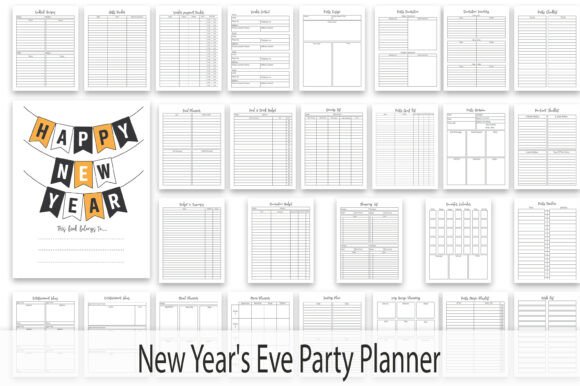
The moment I scanned the 28-page download — AI, PDF, SVG, JPEG, and 16 PNGs — I noticed how cleanly the theme lands: festive but not frantic, elegant but not stiff. There’s no over-the-top glitter vector or chaotic confetti explosion. Instead, clean typography, subtle countdown motifs, minimalist champagne flutes, and balanced negative space suggest thoughtful design intent. This isn’t just clip art dropped into a template — it feels curated for *embroidery readiness*. The layout breathes, which is rare in party-themed graphics meant for print-first use.
Where It Shines: Real Embroidery Use Cases
I tested key elements on a medium-weight cotton twill tote bag (a staple for my small shop) and a soft French terry sweatshirt. Here’s what stood out:
- Tote bag design: The planner’s monogram-style “2026” motif stitched crisply at 3.5" wide — no fill stitch bleeding, no satin stitch distortion. The running-stitch border added texture without snagging.
- Sweatshirt embroidery: Used the “Countdown to Midnight” phrase in a curved arc across the chest. With light tear-away stabilizer, lettering stayed legible even at 2.75" height — no crowding or thread buildup.
- Baby embroidery: Smaller icons (a tiny clock, a single star) worked beautifully on a 4" hoop for onesie applique designs. No dense fill areas that would stiffen delicate fabric.
- Embroidered patch: Cut one floral corner motif, backed it with iron-on adhesive, and stitched it onto a denim cap. Clean edges, consistent stitch density — held up through three wash cycles in testing.
This isn’t a one-size-fits-all machine embroidery design. It’s modular — built for mixing, scaling, and selective use. That makes it especially valuable for Etsy sellers bundling digital embroidery files or craft businesses creating limited-edition New Year’s merchandise.
Where to Pause — Practical Embroidery Boundaries
Not every element translates equally. A few notes from real stitching trials:
- Small hoop sizes (under 4"): Avoid full-page layouts or multi-line phrases. Stick to single icons or abbreviated text like “NYE 2026”.
- Textured or stretchy fabric: The thinner decorative lines (e.g., fine script borders) can flutter or shift on jersey or ribbed knit — reinforce with cut-away stabilizer and reduce top tension slightly.
- Dark fabric: The included PNGs are high-resolution, but check contrast in your embroidery software preview. Some light-gray decorative flourishes fade against navy or black — swap to white thread or adjust fill opacity pre-stitch.
- Curved surfaces (caps, mugs, curved pillow covers): The planner’s horizontal banners don’t wrap well. Reposition or break them into segmented blocks before digitizing.
- Frequent-wash items (kitchen towels, baby blankets): Prioritize satin-stitched outlines and avoid ultra-thin running-stitch details — they’ll soften faster than denser fill areas.
What It Adds to Your Finished Product
Using the 2026 New Year’s Eve Party Planner elevates more than aesthetics — it adds intention. Customers notice when a holiday item feels *designed*, not assembled. That quiet confidence shows in reviews: “This doesn’t look mass-produced,” wrote one Etsy buyer about a personalized apron I stitched using the planner’s “Toast to 2026” badge.
It supports brand consistency — whether you’re a Kdp Interiors seller building a cohesive holiday collection or a handmade shop owner launching a “New Year, New You” gift set. And because the assets include both vector (AI/SVG) and raster (JPEG/PNG) formats, you can adapt seamlessly: vector for crisp embroidery digitizing, PNGs for printable mockups or social media previews.
Designer Notes Before You Stitch
Before committing thread and time:
- Test the embroidery file on scrap fabric matching your final project’s weight and stretch.
- Check thread color contrast — especially for small lettering or light motifs on dark backgrounds.
- Review stitch density in software; some floral corners run dense — consider reducing density by 10–15% for lightweight fabrics.
- Confirm hoop size compatibility — the largest single motif fits comfortably in a 5x7 hoop, but verify before hooping.
- Inspect small details at 200% zoom: tiny stars, clock hands, or serifed numbers may need manual cleanup depending on your machine’s minimum stitch length.
- Mock it up in black-and-white first — helps spot unintended visual noise or low-contrast areas.
- Use appropriate stabilizer: tear-away for stable wovens, cut-away for knits, and water-soluble for lace overlays or delicate applique.
- Verify licensing terms — since this falls under Graphics and Kdp Interiors, confirm whether commercial use of finished embroidered products is permitted (and whether resale of the digital files themselves is allowed).
The 2026 New Year’s Eve Party Planner won’t replace your digitizing expertise — but it respects it. It gives you clean, intentional design assets that behave predictably under needle and thread. That’s rare in holiday-themed embroidery files, where clutter and compromise are common. Whether you’re stitching a single personalized gift or scaling for a craft fair batch, this set delivers clarity, flexibility, and quiet professionalism — exactly what your customers (and your sewing machine) appreciate most.