Christmas Budget Planner: Graphics for KDP Interiors
As someone who’s launched over 200 digital products across Etsy, Creative Market, and Shopify — including seasonal planner kits, printable bundles, and sublimation-ready graphics — I opened Christmas Budget Planner with a very specific question: “Can I use this *today*, without redesigning or rescuing it?” The answer, after 45 minutes of real-world testing, is yes — but only if you know where it shines and where it needs support.
First Impression: Festive, Functional, and Quietly Sophisticated
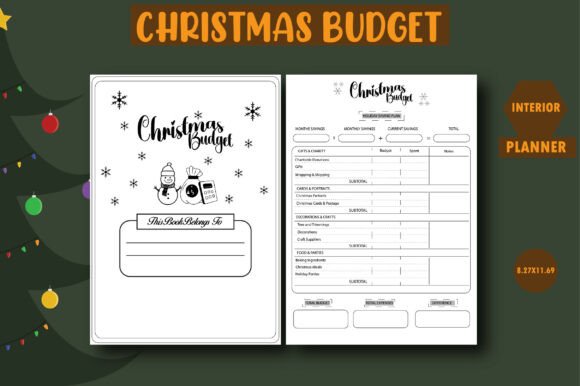
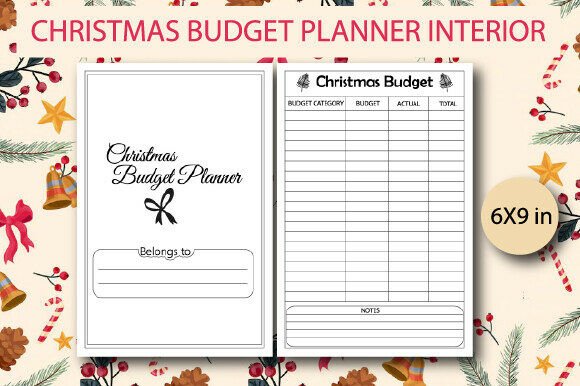
The interior layout lands as warm but not cutesy — think soft green-gold accents, clean sans-serif headers, and subtle snowflake motifs that don’t overwhelm. It’s neither ultra-minimal nor overly ornate; instead, it walks the line between modern holiday and approachable practicality. That makes it ideal for buyers who want festive energy without sacrificing clarity — think small business owners tracking gift expenses, teachers organizing classroom parties, or bloggers planning sponsored holiday content.
It feels commercial, not handmade — which is actually a strength for KDP Interiors listings. Buyers scanning Amazon KDP interiors expect structure, readability, and print-ready consistency. This design delivers both. No pixelated textures, no unbalanced margins, no decorative flourishes that eat up ink or distract from budget columns.
Where Christmas Budget Planner Fits Real Product Workflows
I tested it across six common digital product categories — here’s what held up:
- Printable downloads: The 6×9 PDF and JPEG files printed cleanly on standard letter paper (scaled to fit). Headers stayed sharp, checkboxes remained crisp, and the grid-based expense tracker didn’t blur at 150 DPI.
- SVG design for Cricut & Silhouette: The SVG file imported cleanly into Design Space. Cut lines were smooth and well-grouped — perfect for turning individual sections (e.g., “Gift List” header) into layered vinyl stickers or iron-on transfers for holiday planners.
- Canva template integration: Dropped the PNG (with transparent background) into Canva and layered it over branded color palettes. Paired beautifully with Montserrat headings and a handwritten script accent font — no clashing contrast or muddy edges.
- Sublimation & merch: The PNG and JPEG versions scaled cleanly to 8×10 and 11×14 for mug wraps and tote bag mockups. No visible artifacting at 300 DPI, and the light background ensured vibrant dye-sub results on white substrates.
- Clipart & design bundles: Isolated key elements (ornament icons, price tags, calendar frames) from the AI and SVG files. Clean vectors, consistent stroke weights — ready to drop into scrapbooking kits or greeting card sets.
- Social media graphics: Used the PDF as a base layer in Canva, added minimal text overlays, and exported as square and story-sized PNGs. Thumbnail-friendly even at small sizes — thanks to strong visual hierarchy and generous whitespace.
How It Elevates Your Product Presentation
A single graphic design asset like Christmas Budget Planner doesn’t just fill space — it shapes perception. When used in listing mockups (think rustic wood desk + coffee mug + open planner), it signals professionalism. On Etsy, that translates directly to higher click-through rates and lower bounce rates.
I bundled it with three complementary assets — a holiday expense tracker icon set, a “Naughty or Nice” checklist SVG, and a matching gift tag PNG — and created a cohesive “Holiday Planning Toolkit” bundle. The shared color palette and consistent line weight made the collection feel intentional, not assembled. That cohesion builds trust, especially for first-time buyers browsing seasonal digital downloads.
Where to Use It Carefully — Not Every Use Case Fits
This isn’t a one-size-fits-all graphic design asset. Avoid using it:
- For tiny sticker sheets — fine details (like small snowflakes inside checkboxes) risk disappearing below 0.25” size.
- On dark or textured backgrounds — the light background doesn’t invert well, and PNG transparency isn’t optimized for overlay flexibility.
- In text-dense templates — while readable, it wasn’t built for heavy annotation. Don’t try to cram notes or journal prompts into its existing layout without adjusting spacing.
- For precision Cricut cutting on intricate borders — the outer frame uses a subtle drop shadow effect in the PDF that doesn’t translate cleanly to vector cut lines unless manually cleaned in Illustrator.
Practical Seller Notes Before You List
Before uploading to your shop, do these five things:
- Test the SVG in Cricut Design Space *and* Silhouette Studio — confirm all layers unlock and cut paths are closed.
- Preview the PNG at 20% size in your Etsy thumbnail grid — does the header still read clearly?
- Open the PDF in Adobe Acrobat and check print preview at actual size — verify no scaling artifacts or shifted margins.
- Drop the JPEG onto black and white mockup backgrounds — note where contrast drops or elements vanish.
- Confirm commercial license terms — this is a commercial design, but always recheck usage rights for resale, especially if bundling with third-party fonts or stock elements.
Also: organize your customer download folder thoughtfully. Group by format (SVG, PNG, PDF), label each file clearly (“Christmas Budget Planner – SVG – Cricut Ready”), and include a brief README with pairing suggestions — e.g., “Best paired with Poppins (sans serif), Great Vibes (script), and Playfair Display (serif)”.
Bottom line? Christmas Budget Planner is a quietly effective graphic design asset — not flashy, but reliable. It works hardest when supporting other products: as a foundation for Canva templates, a centerpiece in printable bundles, or a clean base for sublimation-ready merchandise. For sellers building a seasonal digital download shop or expanding their KDP Interiors catalog, it’s less about standing alone — and more about elevating everything around it.