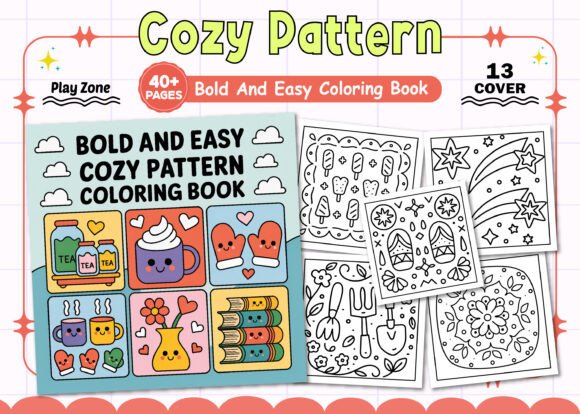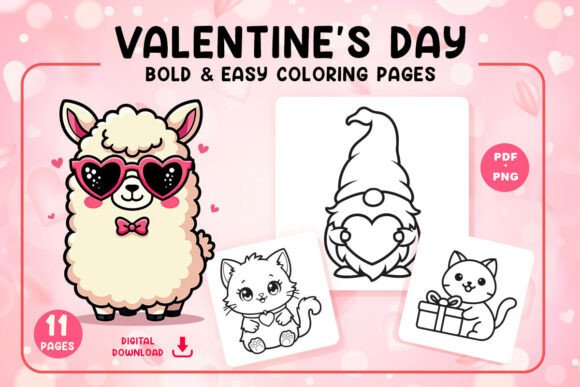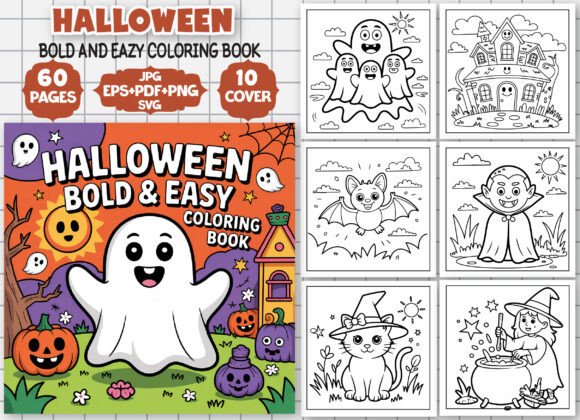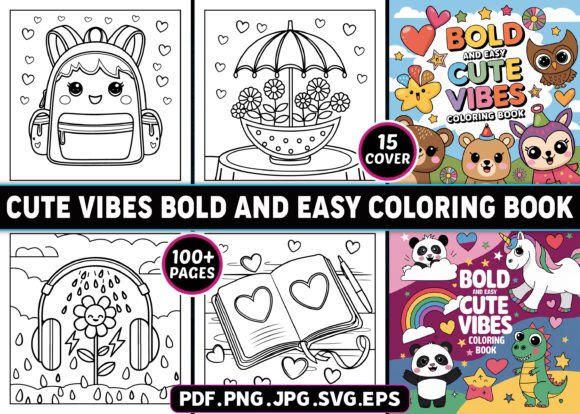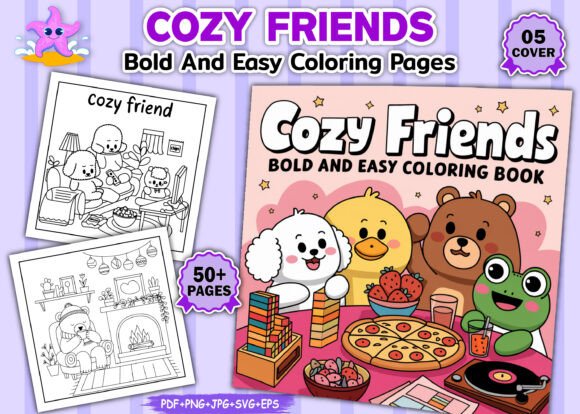
Cozy Friends Bold and Easy Coloring Book
A Designer’s First Glance: Warm, Friendly, and Ready for Stitching
When I opened the Cozy Friends Bold and Easy Coloring Book files, my immediate impression was one of quiet confidence—not flashy, not fussy, but genuinely inviting. The line work is clean, generous in weight, and intentionally uncluttered. Think soft animal silhouettes with gentle curves, friendly faces, and open negative space that breathes. It doesn’t scream “look at me”—it leans in with warmth. That’s rare in digital embroidery assets meant for Kdp Interiors and Graphics use, where visual noise often overshadows usability. As a designer who regularly translates coloring pages into machine embroidery designs, I appreciated how little editing this would need: no thinning of overlapping lines, no redrawing of shaky edges, no guessing at intent. What you see is what stitches well.
This Isn’t Just a Coloring Page—It’s a Thoughtful Embroidery Foundation
I tested Cozy Friends Bold and Easy Coloring Book as the core motif for a custom embroidered tote bag destined for a local baby boutique. We chose a medium-weight canvas tote, paired it with soft pastel thread, and used a standard 4” hoop. The result? Crisp satin stitch outlines held beautifully, fill stitches settled evenly without puckering, and the generous spacing between elements kept the design legible—even at 3.5” wide. Customers responded immediately to its charm: “It feels handmade, not mass-produced,” one told me. That’s the quiet power of bold, intentional line work. It reads clearly on sweatshirt embroidery, holds up on tea towels after repeated washing, and translates effortlessly into embroidered patches or pillow covers. For Etsy sellers and small shop owners, that means faster mockup prep, fewer customer questions about clarity, and higher perceived value in your finished product.
Where It Shines—and Where to Pause
Cozy Friends Bold and Easy Coloring Book excels on stable, medium-to-heavy fabrics: denim aprons, cotton-blend sweatshirts, linen pillow covers, and structured caps. Its bold outlines and open shapes make it forgiving on textured surfaces—no lost detail in woven fabric weaves or subtle slubs. On baby embroidery projects (think onesies or burp cloths), the simplicity reads instantly, even at smaller scales. And for holiday embroidery or personalized gifts—say, a stitched name + one cozy friend motif on a kitchen towel—it adds warmth without overwhelming.
That said, proceed thoughtfully on stretchy knits or very thin fabrics like voile or lightweight rayon. While the design itself isn’t overly dense, its confident lines demand solid stabilization. Always test the embroidery file on scrap fabric first—especially if you’re planning commercial embroidery runs. Also, avoid pushing it into tiny hoop sizes (<3”) unless you’ve verified that corner curves and facial features retain their character. And while the coloring book aesthetic suggests playful freedom, remember: embroidery isn’t sketching. Tiny interior details—like whiskers or paw pads—may simplify or vanish entirely depending on stitch density and thread thickness. If those nuances matter to your brand, check them early.
Design Integrity Meets Real-World Use
What makes Cozy Friends Bold and Easy Coloring Book stand out among digital embroidery files isn’t novelty—it’s reliability. It supports brand consistency because it works across categories: a single motif becomes a cohesive line—from embroidered patch collections to printable mockups for your Etsy listings. It builds customer trust by delivering exactly what the preview promises: friendly, unhurried, and hand-crafted in spirit—even when stitched by machine. For craft business owners, that consistency shortens decision fatigue. You don’t have to over-explain the design; its clarity does the work.
I also appreciate how well it performs in black-and-white mockups. Many coloring-based embroidery files fall flat without color context, but this one carries its personality through shape alone. That’s vital when presenting to clients or prepping for dark fabric backgrounds. Speaking of contrast: always review thread colors against your base fabric before stitching. A warm beige thread on oatmeal linen reads differently than on charcoal gray cotton—and Cozy Friends Bold and Easy Coloring Book’s openness gives you room to play, not panic.
Practical Notes Every Embroidery Designer Should Keep Handy
- Test the embroidery file on scrap fabric *before* cutting your final piece—especially for custom apparel or baby embroidery.
- Check stitch density visually; high-density fills may require tear-away stabilizer, while lighter motifs pair well with cut-away for long-term wear.
- Confirm hoop size compatibility—some layouts may need slight repositioning for tight spaces like cap fronts or sleeve cuffs.
- Inspect small details in both light and dark mockups; what reads softly on white may disappear on navy.
- Use proper stabilizer for your fabric type—don’t assume “medium weight” fits all; test for puckering or shadowing.
- Verify licensing terms before selling finished items or bundling the design into digital products—this is critical for Etsy sellers and digital product sellers.
- Remember: bold doesn’t mean inflexible. This design adapts beautifully to applique design workflows or hybrid techniques pairing satin stitch outlines with fabric inserts.
The Bottom Line for Makers Who Value Craft Over Clutter
Cozy Friends Bold and Easy Coloring Book isn’t a trend-chasing graphic—it’s a thoughtful, stitch-ready asset built for longevity. It supports slow, intentional making: the kind that shows up in a boutique’s seasonal collection, a handmade gift wrapped with twine, or a small shop’s best-selling embroidered patch. It respects the embroiderer’s time and the customer’s eye. If you’re selecting design assets for real projects—not just placeholders—this one earns its place in your working library. Not because it’s perfect, but because it’s purposeful, practical, and quietly full of heart.