Delivery Driver Log Book
A Designer’s First Look: Clean, Functional, and Quietly Confident
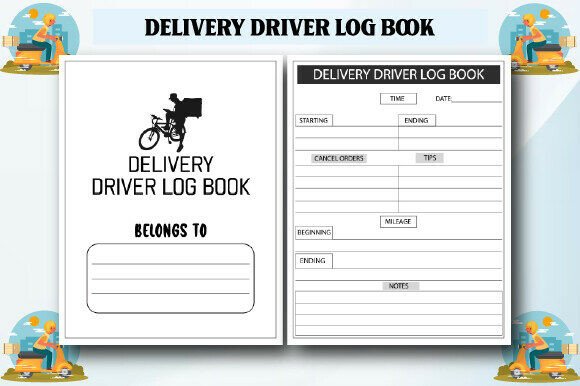
When I opened the Delivery Driver Log Book files, my first thought wasn’t “cute” or “trendy”—it was “this feels like something someone would actually use.” The layout is uncluttered, with clear hierarchy between title, date fields, and signature lines. There’s no excessive ornamentation, no forced whimsy—just thoughtful spacing, balanced weight in the letterforms, and a subtle nod to vintage logbook charm without leaning into cliché. As an embroidery designer who’s stitched everything from nursery names to boutique coffee shop logos, I appreciate how rare it is to find a design that reads as both professional and approachable at 3 inches tall on a tote bag—or even smaller on a baby onesie.
Where It Shines: Real Projects, Real Stitching
I tested the Delivery Driver Log Book as an embroidered patch for a small-batch line of delivery-themed aprons—think local bakeries, flower shops, and micro-roasters. On medium-weight cotton twill, with tear-away stabilizer and standard 40-weight thread, the text remained legible down to 2.5 inches wide. The uppercase sans-serif font holds up beautifully in satin stitch, especially the clean caps and consistent stroke width. No thin serifs to vanish mid-stitch, no fragile connectors to fray after washing. That makes it ideal for sweatshirt embroidery, custom apparel for small logistics teams, or even personalized gifts for new drivers (yes—some folks *love* their jobs).
It also translated well onto a linen tea towel using fill stitch for the title bar and running stitch for light grid lines—giving texture without bulk. For Etsy sellers, this is gold: it works as a standalone design on a kitchen towel, but also layers cleanly with other Kdp Interiors graphics if you’re building a cohesive collection. And because the composition is horizontal and centered, it adapts easily to pillow covers, cap fronts, and even the back yoke of a lightweight jacket.
Where to Pause—and Why
This isn’t a one-size-fits-all embroidery file. If you’re planning to stitch the Delivery Driver Log Book on stretchy fabric like jersey or thin knit t-shirts, add cutaway stabilizer and reduce stitch density where possible—especially around the fine interior lines. Those grid marks? They’re elegant in PDF, but under the needle, they can blur together if hooped too tightly or stitched too densely. On dark fabric, test contrast first: some lighter gray tones in the PDF or JPEG preview may not translate to high-visibility thread unless you manually adjust color mapping in your embroidery software.
Also, avoid placing it near curved surfaces like cap bills or tight sleeve cuffs unless you scale it down to 2 inches max. The even spacing relies on flat tension—on a baseball cap, those evenly spaced fields can distort slightly at the edges. And while the design includes no tiny icons or micro-details, the smallest text elements (like “Miles” or “Time”) will lose clarity below 1.75 inches on textured fabrics like terry cloth or bouclé. Not a flaw—just physics.
What It Adds to Your Finished Product
The Delivery Driver Log Book quietly elevates perceived value. It doesn’t scream “handmade!”—it whispers “thoughtfully made.” That builds trust. A customer ordering a custom embroidered tote for their small courier service isn’t buying decoration; they’re buying utility wrapped in authenticity. This design delivers that. It reads as intentional, not generic. In a craft fair setting, it stands out among floral monograms and quote-based designs—not by being louder, but by being more grounded.
For digital product sellers, its versatility matters: it functions equally well as a printable mockup asset (thanks to the included PDF and PNG) and as a ready-to-stitch embroidery file. That dual-use strengthens your listings—no need to create separate “digital download” and “embroidery file” versions. Just clarify licensing upfront, since commercial use depends on terms from the seller (Kdp Interiors, in this case).
Practical Notes Every Embroiderer Should Check
- Test first: Run a sample on scrap fabric matching your final project’s weight and weave—especially if using textured, dark, or stretchy materials.
- Review stitch density: If your machine struggles with dense fills, simplify interior lines or convert them to lighter running stitches.
- Confirm hoop size: At full 8.5×11 scale, this isn’t a single-hoop embroidery file—it’s a layout meant for adaptation. Resize thoughtfully for your target application.
- Inspect small details: Zoom in on the PNG and PDF files to see how fine lines and spacing hold up before digitizing or stitching.
- Mock it in black and white: Print a grayscale version to assess contrast—what looks crisp on screen may disappear when stitched in tone-on-tone thread.
- Stabilizer matters: Use cutaway for knits, tear-away for stable wovens, and fusible + tear-away for lightweight linens.
- Licensing check: Since this is listed under Graphics and Kdp Interiors, verify whether resale of finished embroidered items or redistribution of the digital files is permitted before listing on Etsy or elsewhere.
Final Thought: Purpose Over Polish
The Delivery Driver Log Book won’t win awards for flash—but it earns respect for function, flexibility, and quiet craftsmanship. It’s the kind of embroidery file that disappears into the product just enough to feel native, yet remains distinct enough to signal care. Whether you’re stitching a holiday gift for a UPS driver, branding a local delivery co-op, or building a themed collection for your craft business, this design supports intent rather than competing with it. That’s rare. And honestly? That’s what makes it worth keeping in your working library.