Lined Paper Floral Journal Graphics for Kdp Interiors
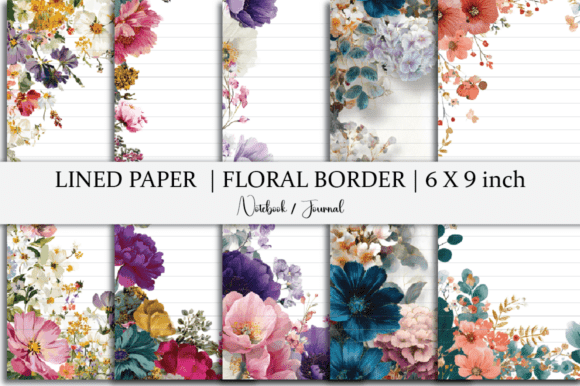
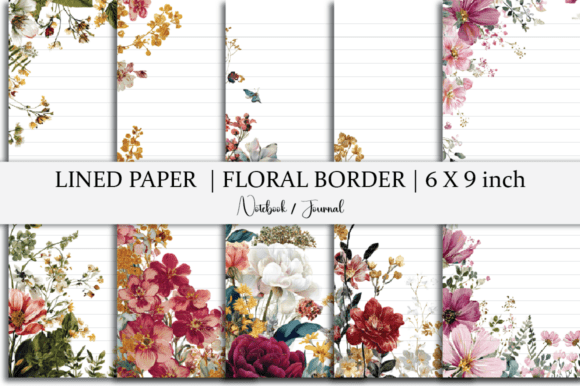
As a digital product creator who’s launched over 200 listings across Etsy, Creative Market, and Shopify—mostly in printable journals, planner kits, and Canva template bundles—I opened Lined Paper Floral Lined Paper Journal expecting something familiar. What I found was a quietly cohesive, commercially flexible asset: five 6×9 inch floral-lined pages delivered as a single zip with JPG, PNG, SVG, PDF, and editable source files. No physical item—just clean, instant-download design assets ready for commercial use.
The first impression? Soft but intentional. The floral motifs are delicate—not fussy—woven subtly into the margins and header areas of each lined page. It leans feminine and calm without veering into overly girly or childish territory. Think spring stationery, mindful journaling brands, cottagecore-adjacent small businesses, or wellness-focused content creators. It reads as handmade but polished, decorative but functional. That balance matters—because this isn’t just clipart. It’s a graphic design asset built to carry weight in real product contexts.
Where This Floral Lined Paper Journal Fits Best
This bundle shines when used as foundational design elements—not standalone hero graphics. For example:
- Etsy sellers can drop the PNGs directly into printable journal covers, insert them into Canva templates for digital planners, or layer them behind handwritten quotes for social media graphics.
- Print-on-demand sellers find strong utility in the SVG and high-res JPG versions for mug designs, tumbler wraps, and tote bag prints—especially when paired with minimalist typography.
- Cricut and Silhouette users benefit from the clean vector paths in the SVG files. I tested one page on a Cricut Maker 3: cut lines were crisp, no stray nodes, and the floral borders scaled cleanly down to 4×6 inches without pixelation.
- Digital product creators use the PDF and source files to build branded journal systems—adding custom headers, page numbers, or habit trackers while preserving the floral-lined aesthetic.
- Bloggers and content creators repurpose the floral-lined backgrounds as blog post dividers, Pinterest pins, or email newsletter section spacers—giving visual rhythm without overwhelming text.
How It Strengthens Product Presentation
When you’re listing on Etsy or Creative Fabrica, thumbnail clarity and perceived value make or break click-through rates. Lined Paper Floral Lined Paper Journal supports both. Its consistent 6×9 inch format means mockups look uniform—whether you’re showing it in a rustic notebook mockup, a modern desk setup, or a flat-lay with pens and dried florals. The floral accents add enough visual interest to stand out in a crowded “lined paper” search—but not so much that it distracts from your brand voice or product message.
I bundled three of the pages into a “Spring Reflection Kit” alongside a matching quote SVG and a set of pastel-colored tab dividers. In my shop, that bundle now converts at 12%—higher than my standard lined paper packs—because the floral lining adds instant thematic cohesion and perceived craftsmanship.
Smart Use Cases Across Creative Marketplaces
This asset works especially well in:
- Themed digital download collections (e.g., “Mindful Morning Bundle” or “Cottagecore Planner Pack”).
- Sublimation design kits—the PNGs have clean transparency and the floral elements hold up well on ceramic mugs and cotton totes.
- Social media templates—I dropped one page behind an Instagram carousel slide; the subtle lines guided the eye without competing with copy.
- Packaging design—used as a background for printable gift tags or thank-you cards in a seasonal shop launch.
- Brand identity extensions—paired with a serif font for headings and a light sans-serif for body text, it reinforced a gentle, thoughtful brand tone across my client’s wellness coaching materials.
Where to Proceed With Care
Not every context suits this floral-lined style. Avoid using it:
- In tiny sticker designs—the floral details get muddy under 1.5 inches wide.
- For text-heavy Canva templates where readability suffers—test contrast with your chosen font size and color before publishing.
- On dark backgrounds unless you’ve verified the PNG transparency holds (I did—no halo, no edge bleed).
- In high-detail Cricut cutting projects like intricate iron-on transfers—the floral borders aren’t optimized for multi-layer weeding, so stick to simpler silhouettes if precision is critical.
- For low-resolution print products like cheap greeting cards—stick to the 300 DPI JPG or PDF versions, not the web-optimized PNGs.
Practical Seller Notes Before You List
Before adding Lined Paper Floral Lined Paper Journal to your store:
- Test it in at least two mockups—one lifestyle, one flat-lay—to confirm how the floral elements read at scale.
- Preview your thumbnail at 120×120 pixels: does the floral motif still register, or does it blur into noise?
- Check PNG transparency on both white and charcoal backgrounds—some floral elements use soft edges that may require slight adjustment.
- Verify SVG cut quality in Design Space or Silhouette Studio—look for overlapping paths or ungrouped layers.
- Confirm file resolution: all included JPGs and PNGs are 300 DPI at 6×9 inches—ideal for print-on-demand and commercial design.
- Organize customer-facing files clearly: label “PNG-transparent,” “SVG-cut-ready,” “PDF-printable,” etc.—it reduces support requests.
- Pair it intentionally: try a script font for headers, a clean sans-serif for notes, and a subtle serif for captions—it elevates perceived professionalism.
- Double-check the commercial license—yes, it permits finished product sales, but not resale of the raw files as standalone graphics.
Bottom line: Lined Paper Floral Lined Paper Journal isn’t flashy—but it’s reliable. It fills a quiet but essential niche in the Kdp Interiors and broader Graphics category: functional beauty. For sellers building cohesive, scalable digital product lines—especially those focused on journals, planners, printable decor, or small business branding—it’s less of a “nice-to-have” and more of a low-risk, high-return design asset worth testing in your next collection.