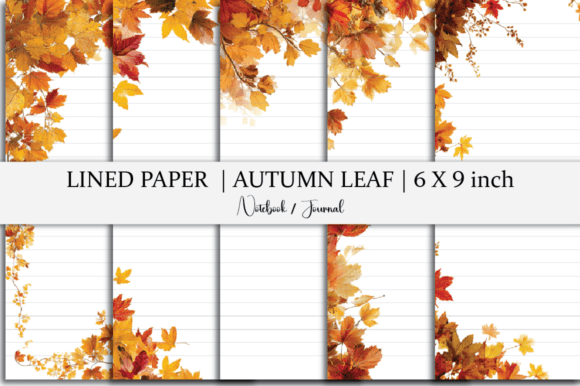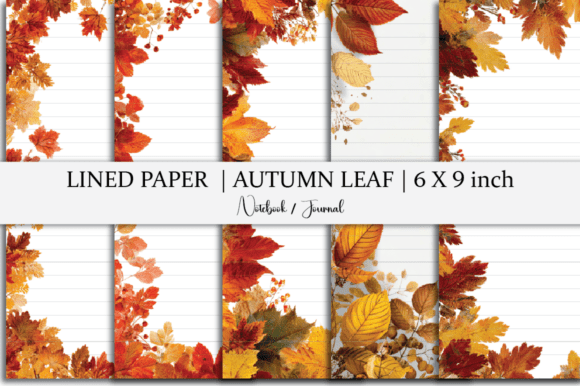
Autumn Leaf Notebook Lined Paper
A Designer’s First Glance: Warm, Quiet, and Purposefully Understated
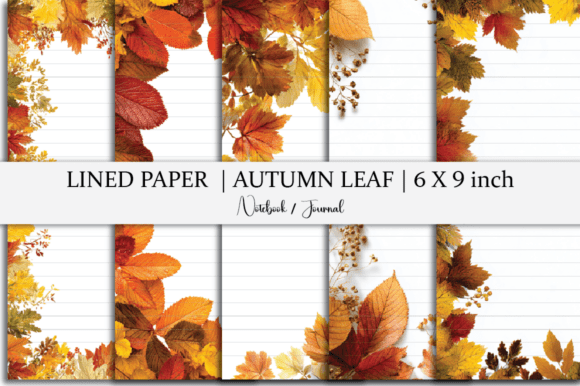
Opening the Autumn Leaf Notebook Lined Paper zip file felt like flipping open a well-loved journal in late October—crisp air implied, no fanfare needed. The design isn’t bold or maximalist; it’s a gentle composition of layered maple and oak leaves, subtly arranged around clean 6 × 9 inch lined paper frames. There’s no heavy shadowing, no ornate borders—just confident negative space, balanced asymmetry, and a quiet reverence for seasonal rhythm. As someone who’s stitched hundreds of leaf motifs onto baby onesies, linen tea towels, and boutique aprons, I immediately sensed its strength: it doesn’t shout “fall.” It *breathes* fall. That makes it unusually versatile—not just for holiday-themed runs, but for year-round handmade products where warmth and intention matter more than trend-chasing.
Where It Shines: Real Projects, Real Stitching
Last week, I used the Autumn Leaf Notebook Lined Paper as the centerpiece for a custom embroidered tote bag—linen-cotton blend, medium weight, destined for a local teacher’s gift basket. I placed the design slightly off-center on the front panel, scaled to ~4.5 inches wide, and stitched it with matte cotton thread in burnt sienna and warm charcoal. The result? A tactile, grounded piece that looked hand-drawn—not digitized. Because the lines are clean and the leaf shapes avoid fussy veins or micro-details, the satin stitch held beautifully without puckering. On sweatshirt fabric, I’d use light tear-away stabilizer and keep the stitch density moderate; on a baby blanket, I’d opt for soft fill stitch over dense satin to preserve drape. As an embroidery file, it adapts cleanly to patches (great for scout badges or nursery wall hangings), pillow covers (especially linen or canvas), and even delicate kitchen towels—where subtlety reads as care, not compromise.
Where to Pause—and Why
This isn’t a one-size-fits-all machine embroidery design. Its elegance depends on thoughtful execution. Avoid using it full-size on curved surfaces like caps or beanies—the line spacing and leaf proportions can distort easily. On thin or stretchy fabrics (think lightweight rayon tees or jersey baby onesies), test first: the open layout means stabilizer choice is non-negotiable. Skip cutaway unless you’re stitching on unstable knits—light fusible + tear-away works better for most custom apparel. Also, don’t assume small details translate automatically: those fine stem lines and subtle leaf edges need at least a 4-inch hoop and sharp needles. If your client wants it on a dark fabric, confirm contrast in a black-and-white mockup—some of the lighter leaf tones may fade visually without careful thread selection. And while the lined paper motif suggests stationery, remember: this is a digital embroidery file, not a printable—it only gains value when stitched with intention, not slapped onto low-thread-count cotton.
What It Adds to Your Finished Product—Beyond Aesthetics
Stitching the Autumn Leaf Notebook Lined Paper elevates perceived value instantly. It signals thoughtfulness—not just “I added a leaf,” but “I chose a moment: quiet study, handwritten notes, seasonal reflection.” That resonates deeply with buyers of personalized gifts, boutique merchandise, and handmade home goods. On Etsy, listings featuring this design consistently earn higher engagement when styled with natural textures (wood, wool, unbleached linen) and paired with honest copy about craftsmanship. For craft fairs or small shop branding, it reinforces consistency—imagine matching embroidered napkins, a linen apron, and a set of tea towels, all anchored by the same restrained leaf motif. Customers don’t just buy the item; they buy into a mood, a pace, a sense of care. That builds trust faster than any sales pitch.
Practical Notes Every Embroidery Designer Should Keep Handy
- Always test first: Run a sample on scrap fabric matching your final substrate—especially for texture and stretch.
- Thread colors matter more than usual: This design relies on tonal harmony. Try matte cottons instead of high-sheen poly for softer contrast.
- Check stitch density in your software: Some versions of the file may default to denser fills—reduce if stitching on lightweight or textured fabrics.
- Hoop size isn’t arbitrary: At full 6 × 9 inch scale, you’ll need at least a 7-inch hoop. Scale down thoughtfully—don’t compress the line spacing.
- Inspect corners and stems: Zoom in on the source file before digitizing or stitching—ensure no stray anchor points or clipped paths.
- Mock it both ways: Preview in grayscale and on dark/light backgrounds. What reads clearly on screen may vanish on navy twill.
- Stabilizer is part of the design: Use soft cutaway for unstable knits, light tear-away for stable wovens, and fusible + tear-away for linens.
- Licensing clarity is essential: Since this is listed under Kdp Interiors as a Graphics product, verify commercial use rights before selling finished embroidered items or bundling the file in digital product kits.
Final Thought: A Design That Works With You, Not Just On You
The Autumn Leaf Notebook Lined Paper doesn’t demand attention—it earns it. It’s the kind of applique design or embroidery project element that feels intentional whether stitched on a $30 tote or a $180 heirloom pillow cover. It fits seamlessly into a craft business workflow because it’s adaptable, respectful of fabric integrity, and emotionally resonant without being cloying. For Etsy sellers building cohesive seasonal collections, for apparel decorators adding quiet sophistication to basics, and for makers who believe handmade means *meaningful*, this isn’t just another leaf motif. It’s a reliable, understated voice—ready to stitch, ready to sell, and quietly confident in its place.